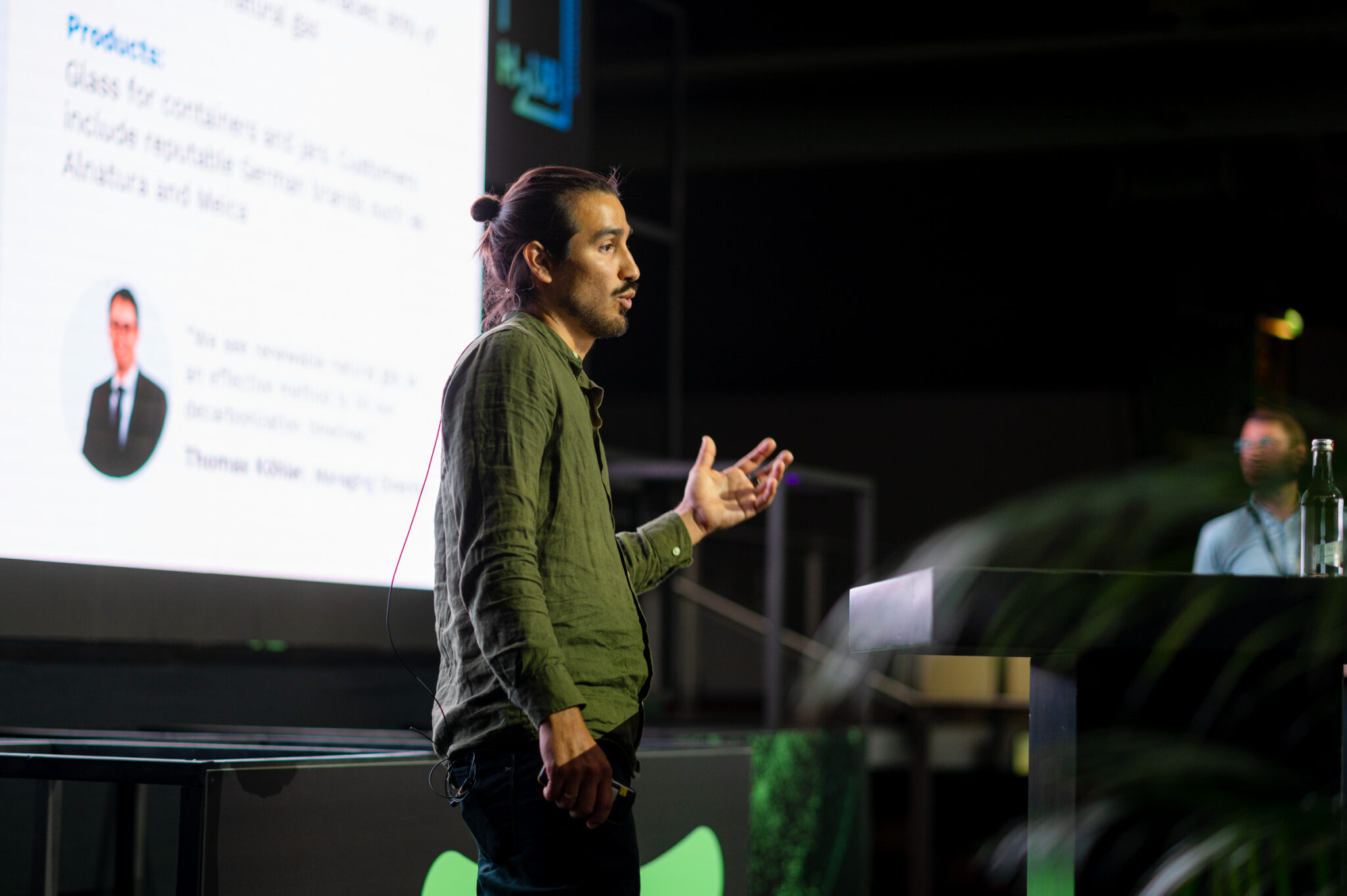
As part of our new series to highlight the success stories of start-ups in our #HYDROVERSE, we feature TURN2X. CEO and Co-founder Philip Kessler shares insights into the start-up’s journey.
Philip, please pitch your start-up story in a few sentences.
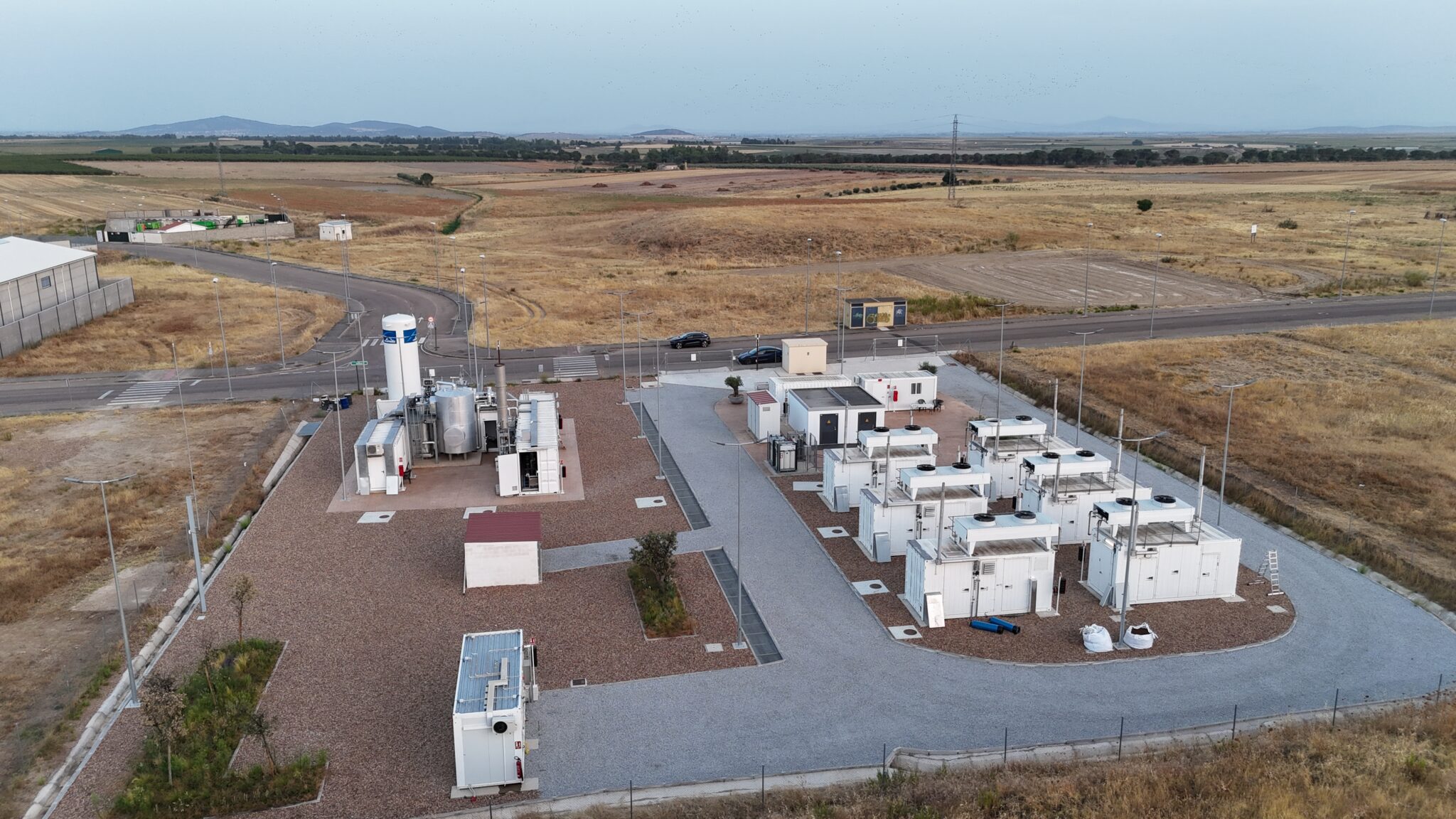
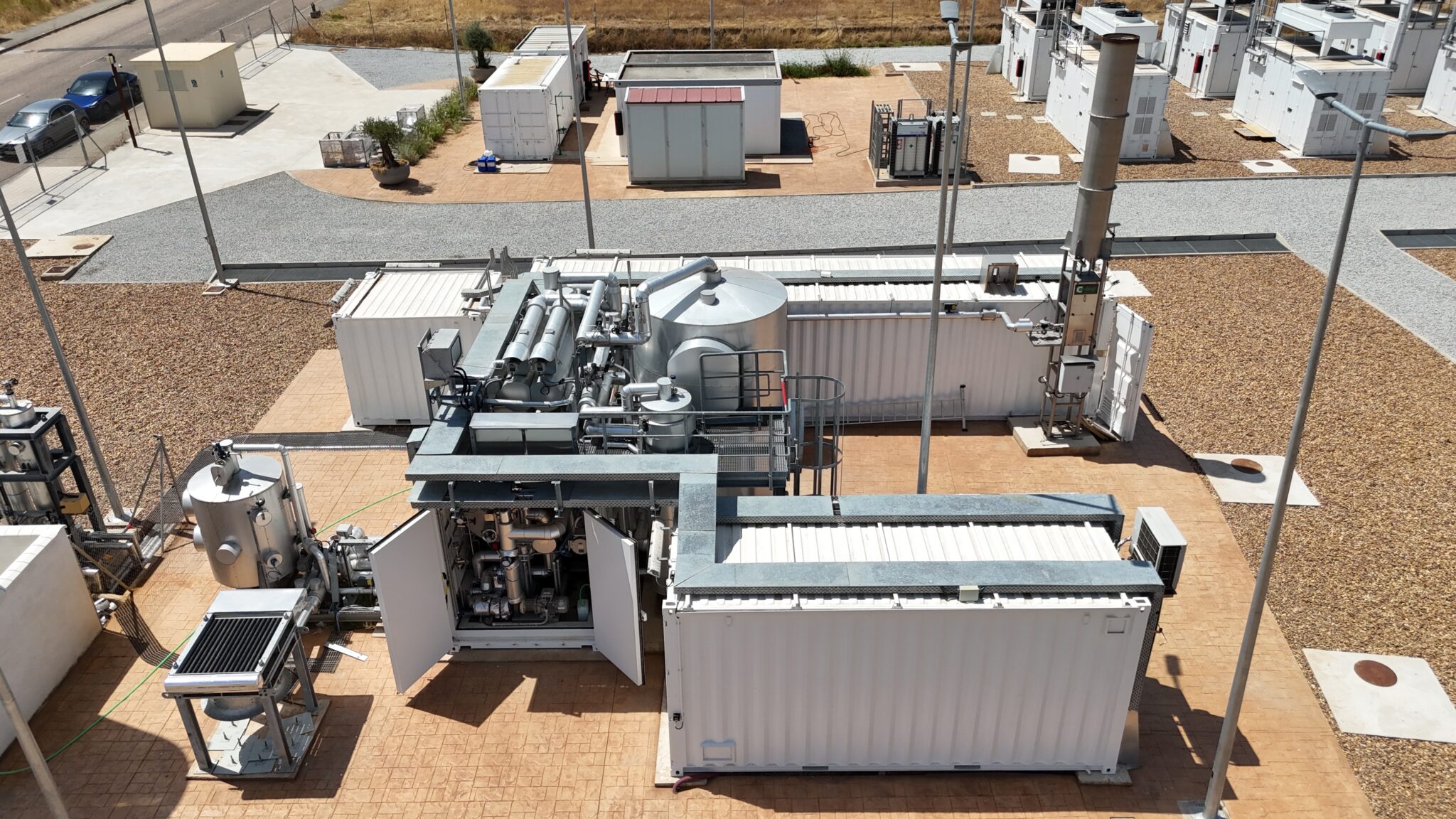
Philip Kessler: TURN2X helps make Europe more energy independent. A lot of industries depend on natural gas, e.g. steel and shipping, with roughly 90% of our natural gas being imported. Additionally, 15% of global emissions are caused by the combustion of natural gas. We at TURN2X address both issues. Our technology turns electricity, water, and CO2 into natural gas, or e-Methane as we call it. It is chemically identical to fossil natural gas, so existing infrastructure can be used. The technology is fully de-risked by our pilot plant in Germany and our commercial plant in Spain with combined over 5,000 operational hours. Now we are deploying more plants across Europe.
What inspired you to found a company?
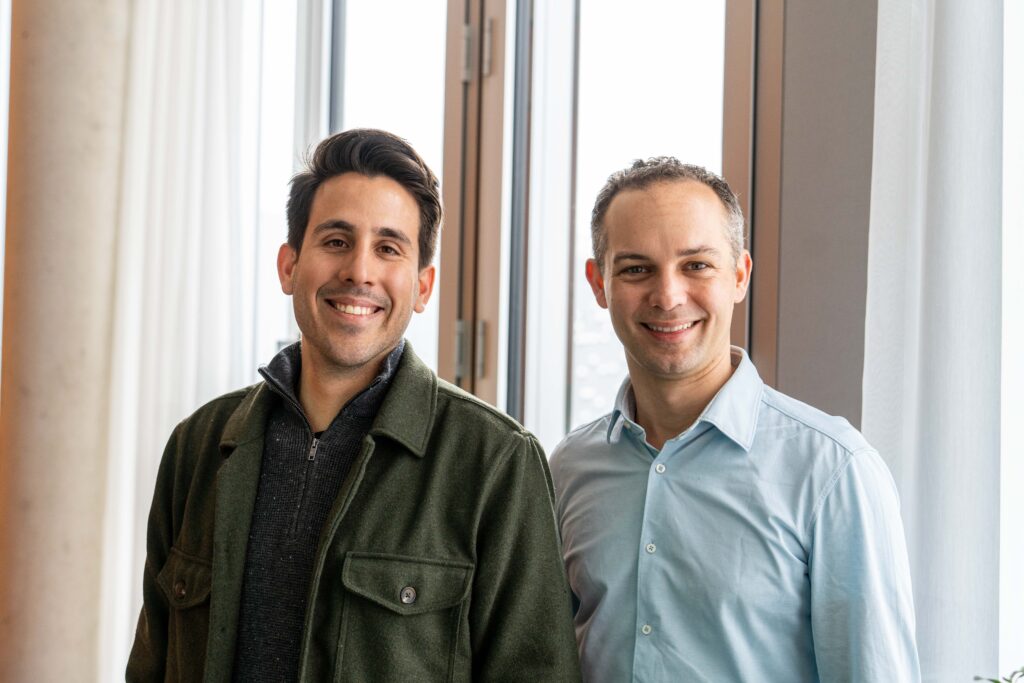
Founding a company is one of the best ways to address the problems we see in the world today. When we started back in 2022, the gas crisis hit everyone. People in Germany were complaining and worrying about our huge dependency from Russia. We thought, let’s not complain, let’s see what we can do about it. I was glad to have found our CTO Dr. Dominik Schollenberger, who has been researching the topic for the last 15 years and our COO Benedikt Stolz who worked at Siemens Financial Services on asset financing. We had the technology and with the gas crisis, the market timing was also right.
Which market or technology assumption did you need to reconsider in the process?
It is a constant process: You have your hypothesis, go into the market, learn, and adapt. In the beginning, we considered Norway to be the place for our e-methane plants: There is cheap electricity and a lot of full load hours because of the abundancy of hydropower. But when we went there, we learned that the infrastructure that we needed was lacking, e.g. no gas grid. But we found other countries that have gas pipelines and cheap renewables and that’s why we went to Spain. It has also one of the cheapest costs for renewable energy in Europe and one of the best constructed grids in Europe.
In terms of the market, we assumed that we would sell directly to industrial customers, but we learned that policy incentives for industrial off-takers like steel or glass haven’t been in place yet. So you need to think through off-take markets and where you can really provide an economic incentive to the customers.
We also learned that finding the right partners for the right parts of your business can help to speed up things. As a start-up you tend to think that doing everything yourself is the fastest way. However, especially when you need to talk to mayors, permitting agencies and such, going through partnerships helps a lot. In Spain, for example, we have a partnership with Axpo, one of the largest utilities in the country, a joint venture with Uniper for our first commercial plant in Spain and partnerships with large biomethane developers.
What advice would you give to other founders who have just started out in the hydrogen market?
Obviously, partnerships. Find the right customers you can provide an economic value for. Think of your start-up in stages: One market needn’t be the one you go for long term. Create solutions for a niche market, deploy your technology, bring the cost down, grow there, and then advance to the next bigger niche until you reach your potential end market. Then, in the case of hydrogen and its derivatives specifically, ignore the naysayers. We are entering the phase after the hype when projects are coming online, and we see big financial investment decisions globally, in China and Europe especially. So, it is happening and everyone who’s saying it isn’t is just ignoring the facts.
What is your next big step?
To put it simply: scale. With over 5,000 operational hours of our technology, we’ve proven the technology and delivery side, producing in Spain and selling in Germany. So, the technology is ready, customers are there, policies in place, and now we need to go from one operational commercial asset to a big pipeline of projects. Scaling up and replacing more fossil gas in the years to come.
In what ways has participating in the H2UB program positively affected your start-up?
Especially when you’re new to the energy or hydrogen sector, the extensive network of H2UB is very helpful – both for investors and partnerships. Also being able to connect to other start-ups through events and programs leads to partnerships. These are really the things we benefitted from: connect the right people at the right time so they can grow their business.
What was your biggest success since participating?
Having the first commercial plant up and running and replacing fossil gas. In the end, what really counts is not to just showing our powerpoint presentations but to build and operate plants, proving that our technology works. Then you find customers willing to buy your product at scale and earn money with it.
Which part or aspect of our accelerator did you find most valuable?
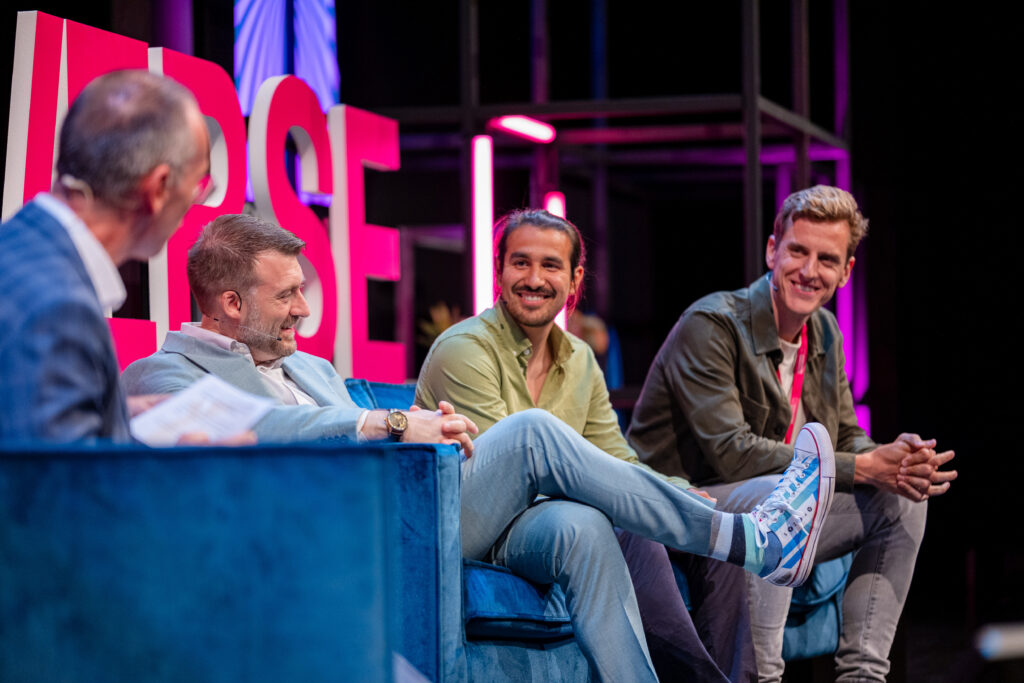
Apart from the network: the events. Especially the HYDROVERSE CONVENTION is always a great event where you bring the right people together. Also, the whole team is super helpful and approachable: If you need them, you can just call them.
What advice or situation do you remember most vividly?
There were many situations and valuable advices. However, it was the introductions we got to the right partners and potential investors.
What needs to be done to further advance hydrogen and green energy innovation in the market?
I really think the hydrogen economy is happening right now. We’re leaving the phase of big announcements and failed projects. We see more FIDs – many in China but also in Southern Europe –, pushed by increasing regulatory in Europe. There is a good grant ecosystem for hydrogen projects and funds already raised about to be deployed. For example, we recently won the EU hydrogen auction as one of only 9 projects in whole Europe in an auction which was 7x oversubscribed. So, we’re entering a phase where hydrogen and its derivatives like e-Methane really provide value to the energy system. There are great times ahead of us now, and I’m excited to see the next months and years unfolding in this industry.
However, there are obviously always obstacles:
- We need to rethink where hydrogen and where its derivates make sense. Many hydrogen projects can be upgraded to e-Methane to unlock use cases where natural gas is used already today. But many of these also depend on new infrastructure and customers need to be convinced to invest huge sums.
- CapEx is still high, but we saw it change in China and now in Europe: The costs are coming down once projects are deployed, machines are procured and built. I think in 12 to 18 months we will see a massive wave of FIDs for hydrogen projects including its derivatives, leaving the ‘hydrogen is dead’-phase and entering the phase where it takes off.
- Germany and Europe need to be quicker in executing the policies, need to have more ambitious targets, and higher penalties. For resilience, it makes sense to have at least part of the production domestically and not to import everything. For this to happen, we need instruments such as “made in Europe” quotas. Otherwise, the solar energy story is going to repeat itself: Germany decided against a national production of solar panels and now there is a huge dependency on China.
You recently celebrated your success with the first end-to-end model for RED III-ready renewable gas production in Spain which you achieved partnering with Siemens and atmen.
How did your collaboration with atmen start?
We got to know atmen personally through the H2UB and stayed in contact with them. Once we knew we needed a certification partner for our e-Methane, we were happy to reach out and work with them, using their expertise.
In what way does the support of an established company like Siemens accelerate your progress?
As a big brand, Siemens helps push the topic of TURN2X and get market recognition through joint appearances. Their software and hardware tools are also helpful. Our asset in Spain is run remotely which saves lots of operational and maintenance time and reduces OpEx.
I think partnerships between established companies like Siemens and scale-ups like TURN2X and atmen are how we can drive innovation in Europe. Neither can do it alone.
About TURN2X
TURN2X is an industrial deep tech company addressing the energy sovereignty and decarbonization challenges of Europe. 90% of our natural gas is imported and key industries like steel making, shipping and dispatchable peak power depend on it. They have developed a technology to turn electricity, water and CO2 into e-Methane, which is 100% compatible with the existing gas infrastructure.