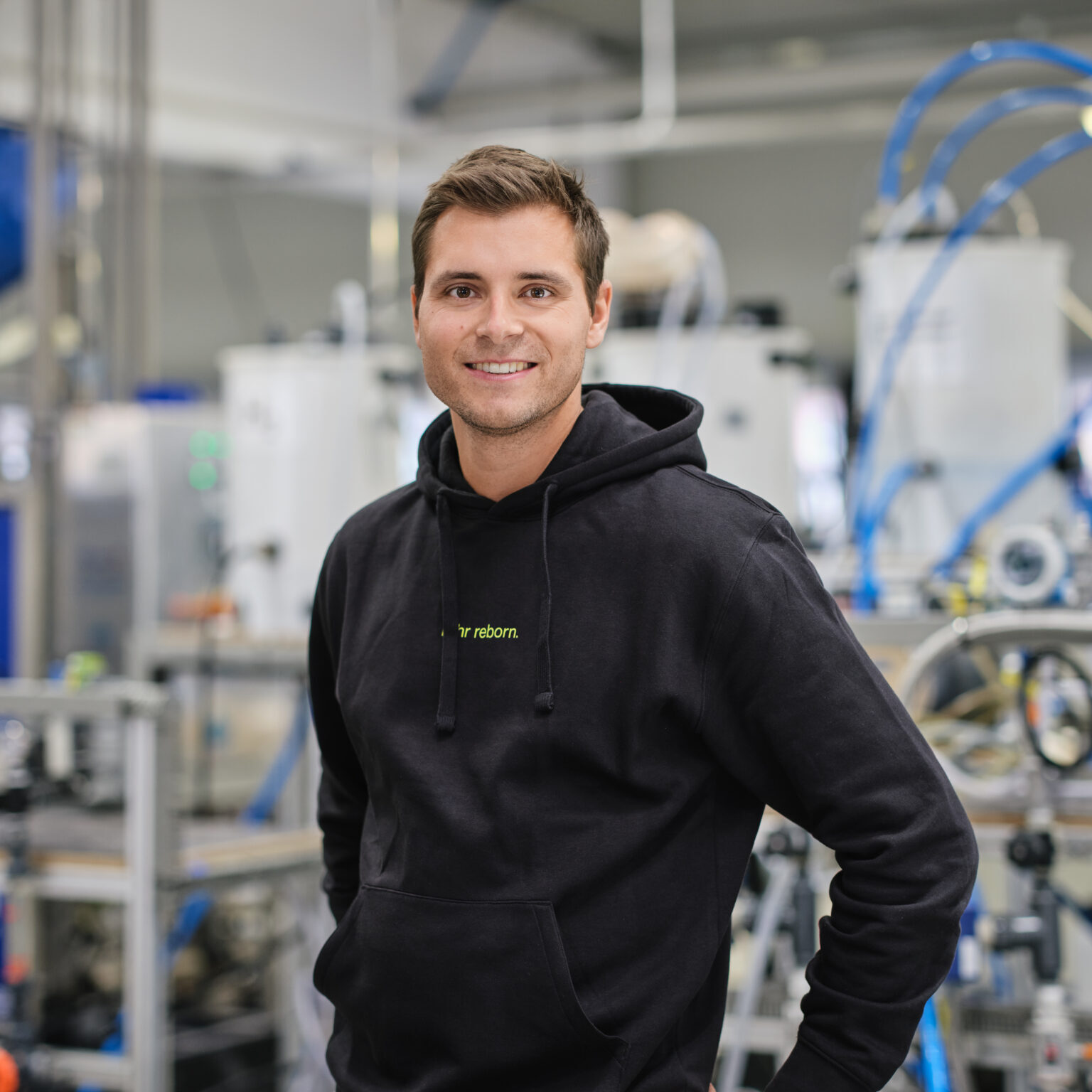
Greenlyte Carbon Technologies is potentially one of the most recognized start-ups of the Ruhr area. They have been part of our SPRINT accelerator, won the HYDROVERSE Best Start-up Award and are constantly releasing new partnerships and projects.
Co-Founder and CEO Florian Hildebrand shared insights with us on Greenlyte’s start-up journey.
Florian, please pitch your start-up story.
Florian Hildebrand: At Greenlyte, we work on the transformation of the carbon sector. Our technology both captures atmospheric CO2 and produces hydrogen. The combination of that process allows us to deliver both molecules cheaply for industrial or new energy processes like the production of e-fuels or atmospheric CO2 used for sequestration processes.
What inspired you to found a company?
I have been an entrepreneur for over 15 years, having founded my first company in school. I also have the financial motivation to invest in something with a purpose that serves a greater good, in this case climate change.
In 2022, I reached out to over 100 researchers in the field of climate tech. Here, I met my co-founder Dr. Peter Behr. He spent 15 years working on this exciting technology, which led me to invest. That’s what I do: I look for stuff that matters and invest. This time it was hydrogen.
Which market or technology assumption did you need to reconsider in the process?
Our assumptions didn’t change much. First we thought about what the biggest risks were that we needed to tackle. Here we had three design principles in mind:
- Even the most efficient process requires energy. So, we needed to use the cheapest form of energy which is renewable energy and built the technology to make use of this.
- CapEx is a limiting factor if you build something for intermittency. In the long run, all technologies and all innovations only make sense if you can compete on a cost basis.
- If you want to get hydrogen into the market, you need to cohabitate with existing industries and make use of existing infrastructure.
What advice would you give to other founders who are just starting out?
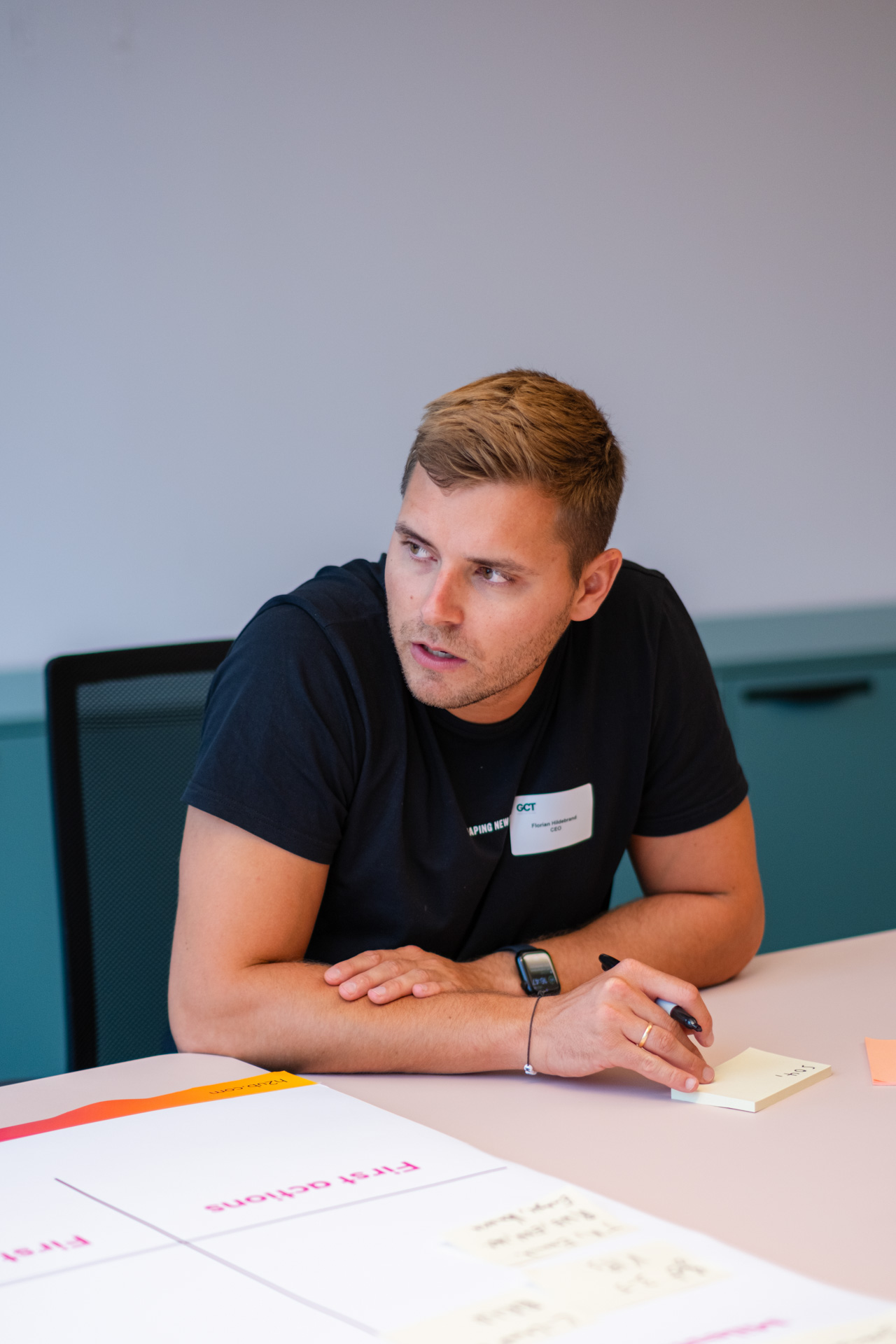
When you aim to tackle difficult problems, you need to make sure to have the right mindset and an intrinsic motivation that goes well beyond money. Especially in hydrogen, you also need to be resilient. Things will go wrong and take longer. All successful companies started off with an idea and then ended up doing something different or changed their business model over time. So, keep in mind that founding a company is a process: go through iteration, have a clear hypothesis, keep challenging yourself but be flexible and open-minded along the way.
What is your next big step?
We’re now in a phase we call commercial viability. It’s about de-risking process and scale to ultimately de-risk the business model. In that way we have something that can be financed by debt and not just by equity and grants.
To grow from a small pilot to a large-scale industrial application is all about modularity.
We’re now designing and constructing our first of a kind facility – our final scale that hopefully demonstrates by the end of 2027 that we de-risked the scaling. Afterwards comes the commercial scaling which means going into a market with a validated technology and scaling concept and partnerships that we scored against the off-takers.
In what ways has participating in the H2UB program positively affected your start-up?
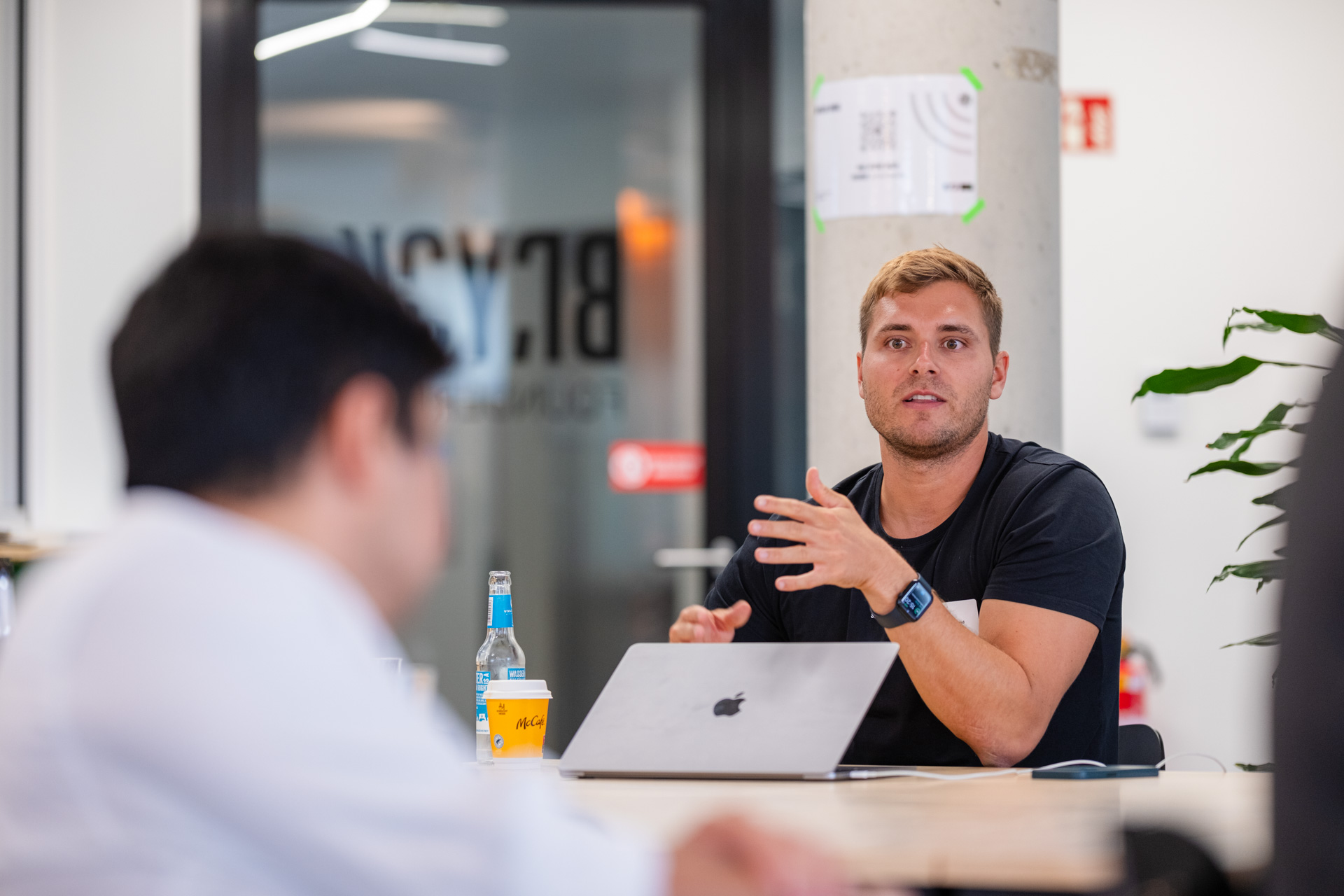
The network and ecosystem of H2UB really helped us. Being based in the Ruhr region ourselves, it is vital that there are hubs like the H2UB and the BRYCK Start-up Alliance who shine a light on Essen and the Ruhr area. All of this gives us and the area international visibility. Together we show that relevant players of the energy and hydrogen market are based in the Ruhr area.
What was your biggest success since participating in the accelerator?
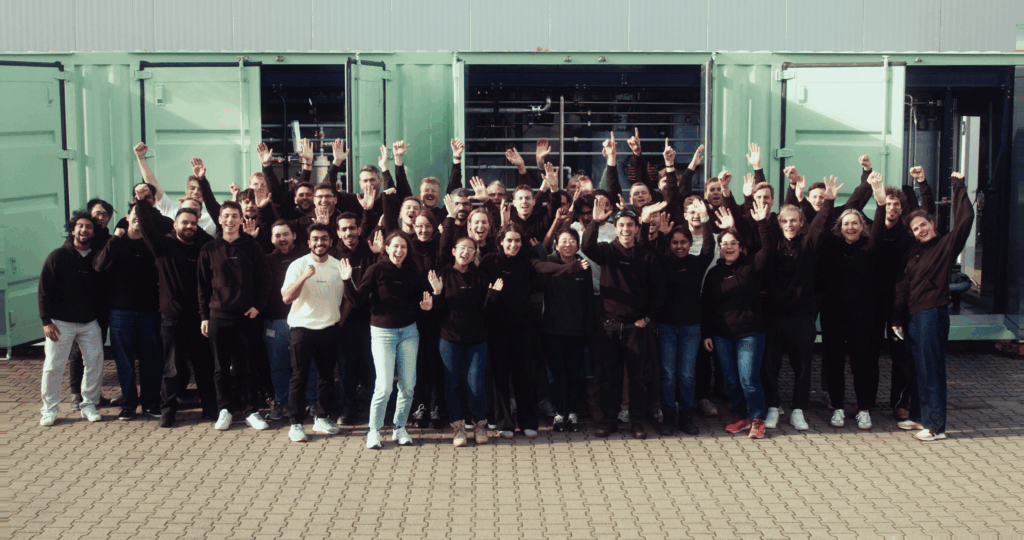
What we’re most proud of is managing to build an awesome team and a culture of 80 people with values from all over the world united by one mission: to have a positive impact on the world. Our different projects, our secured off-takes and funding – all of these are great success stories, but what it really comes down to is teamwork.
Which part or aspect of the H2UB accelerator did you find most valuable?
In a new market, you need to get in touch with the right people. H2UB supported us with introductions and continued access to their network.
For first-time founders, accelerators like H2UB help you by forcing you to think about what you’re doing, working towards your mission in a structured way and challenging it through the exchange with other people and entrepreneurs in the program.
When you’re at a later founding stage, accelerators are still important, but you learn to focus on what you really need, i.e. the network.
Which piece of advice or situation did you remember most vividly?
We have the same vision as H2UB: to push the hydrogen market forward and to show the potential of the Ruhr area.
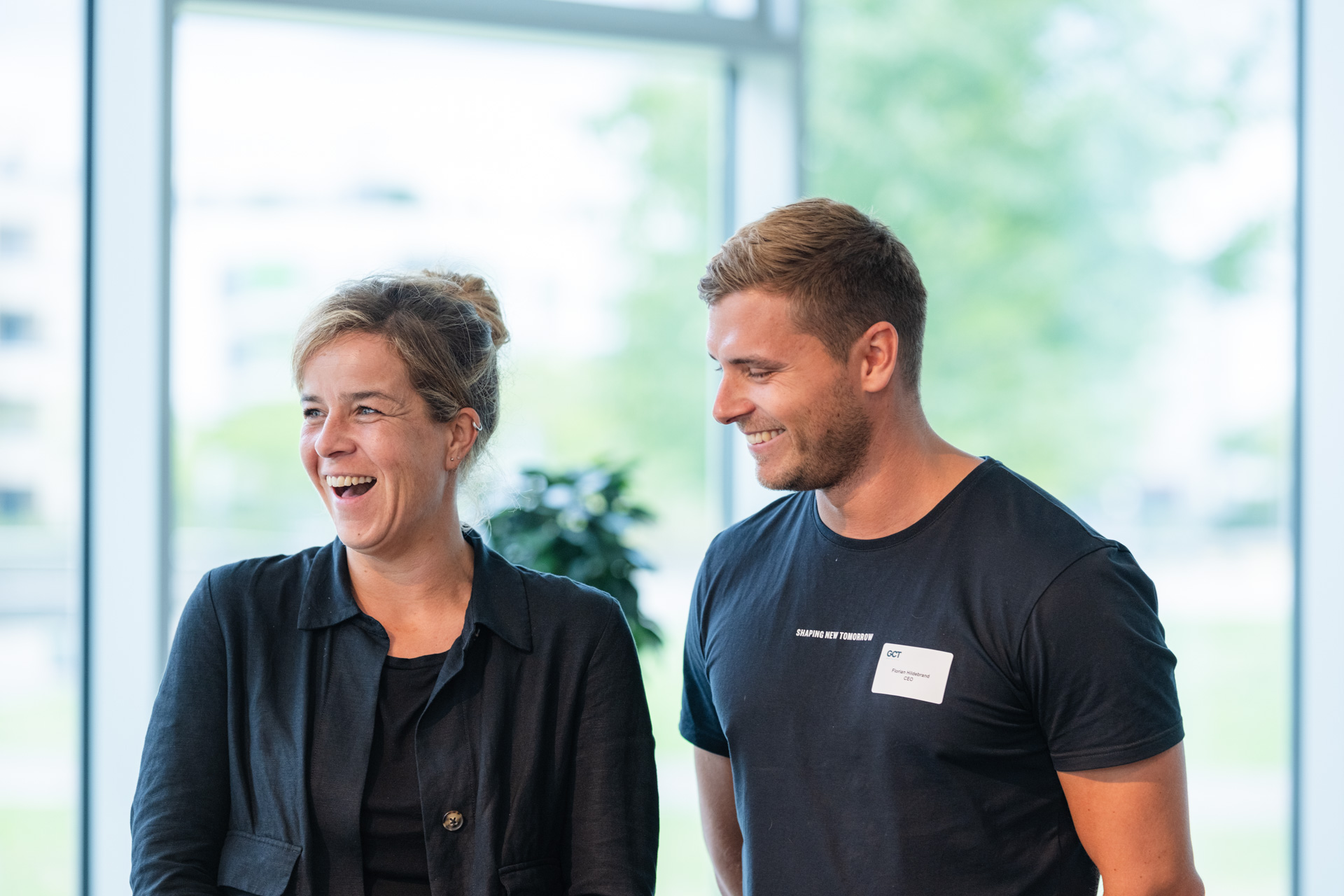
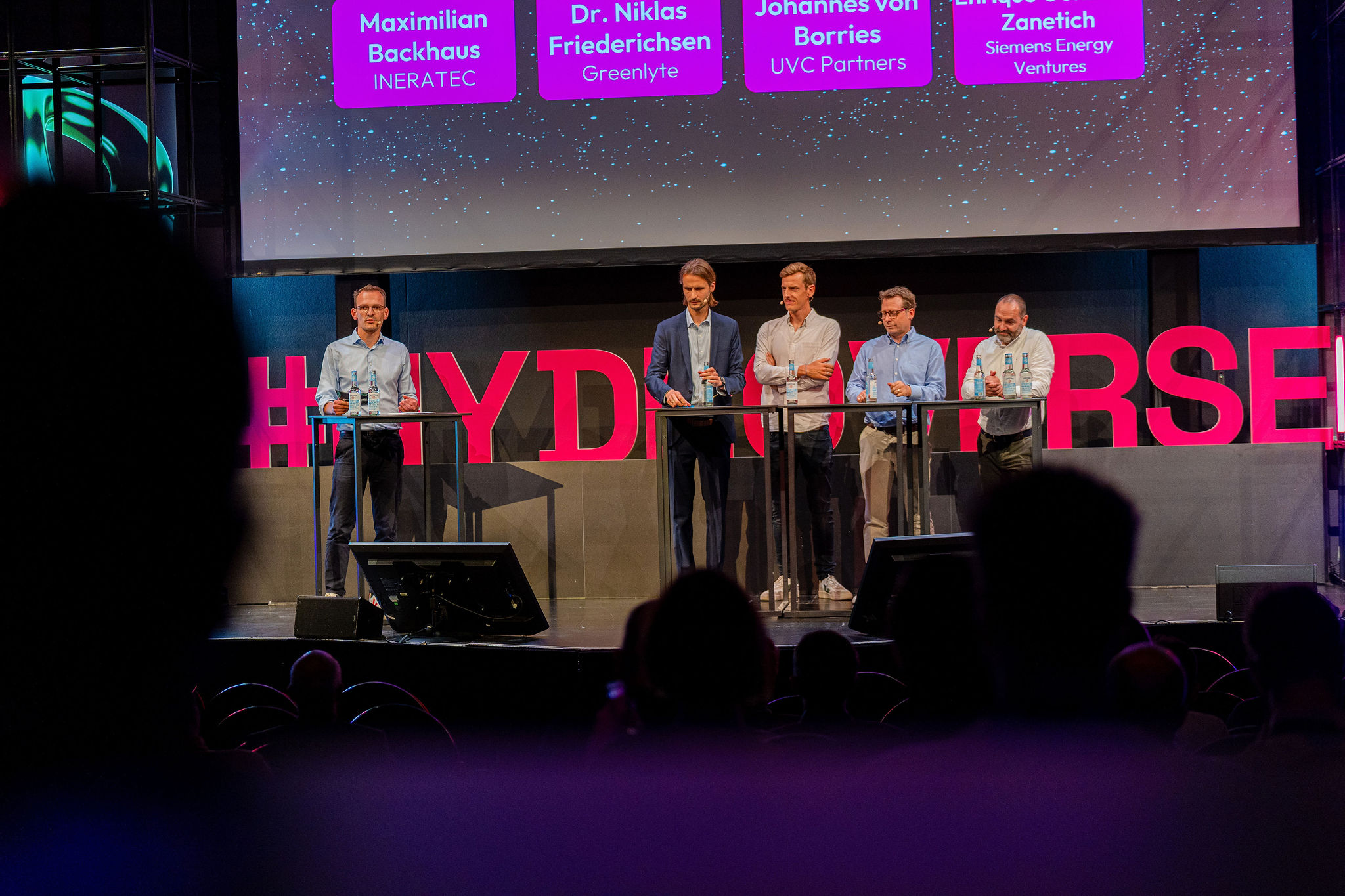
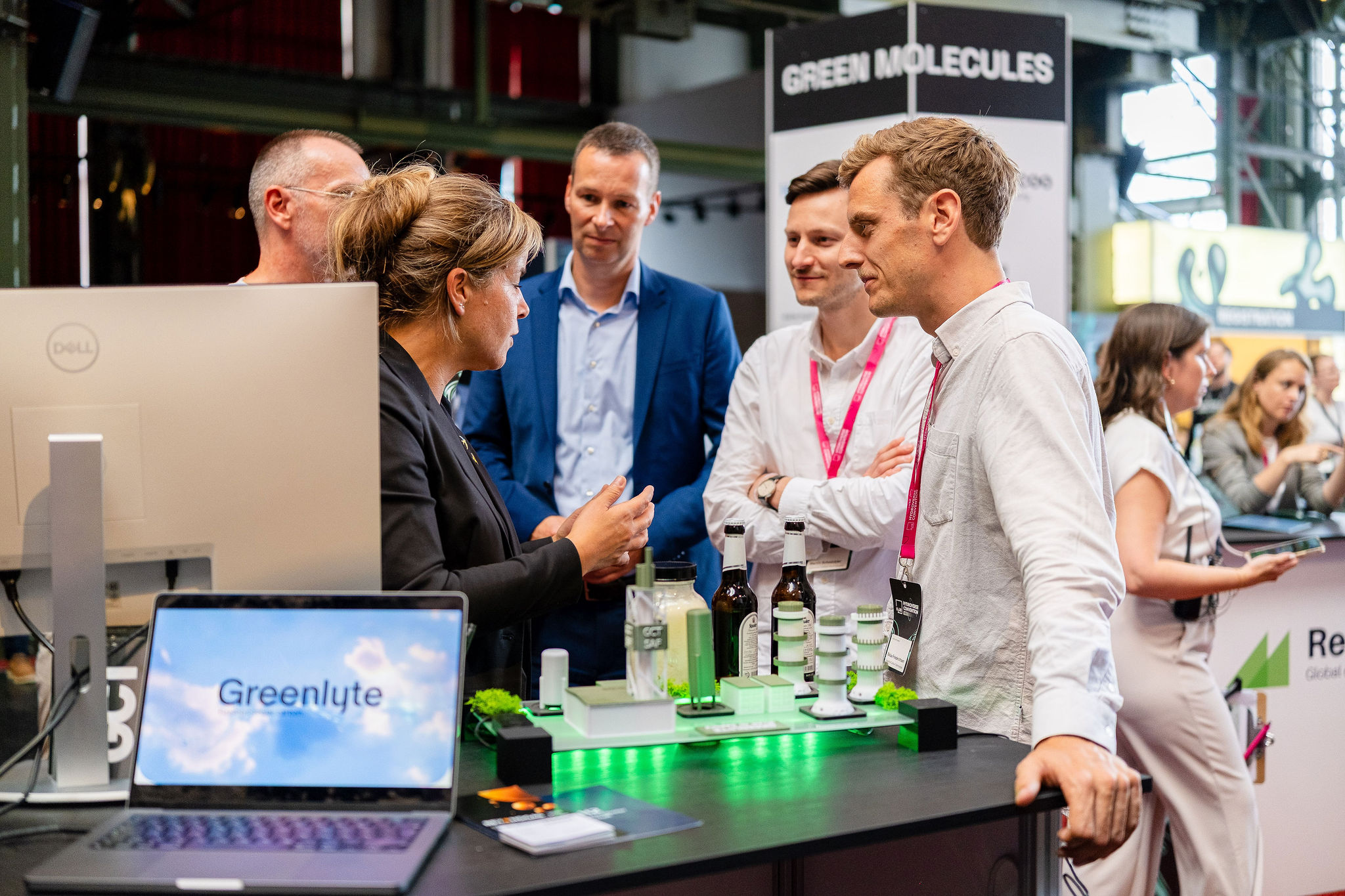
An accelerator is just a small part of the company journey. What matters most is what happens after these months: the long-term relationship and support. For example, for our new facility in Duisburg, H2UB helped us get great people to the opening event. Being on stage at the HYDROVERSE CONVENTION and having a booth there was also important for our visibility.
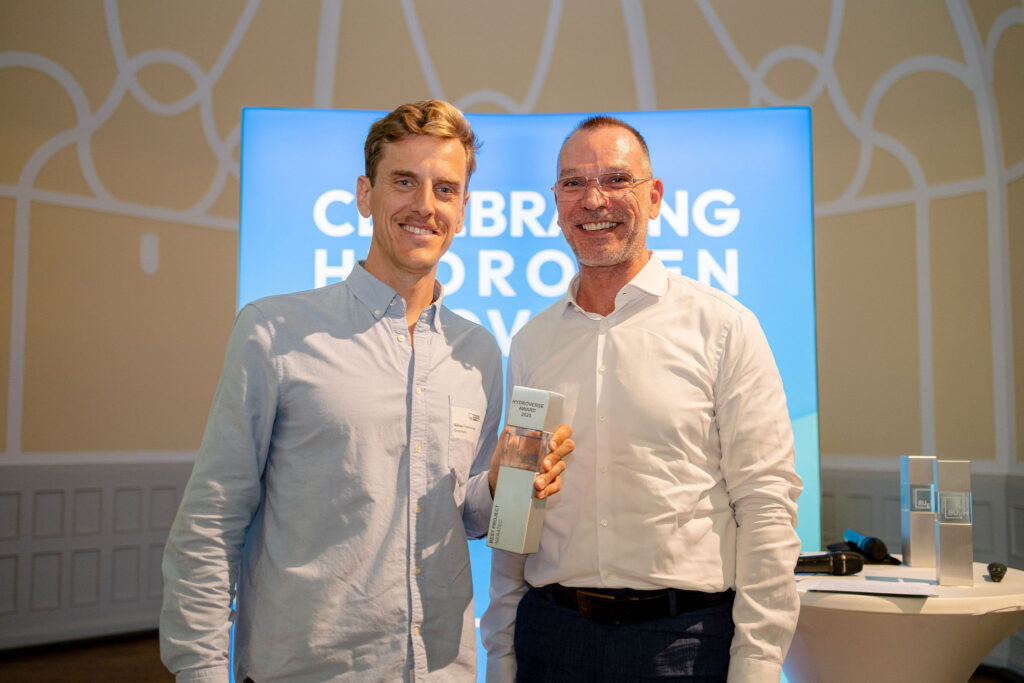
You’ve participated in our SPRINT accelerator, attended events such as the HYDROVERSE CONVENTION and were awarded the HYDROVERSE Award for Best Start-up.
What did you gain from these experiences?
These are great recognitions and validations for the team and the company. Especially in the Ruhr area where most of our suppliers still come from, being able to say we’re part of the H2UB network and won this award helps. Greenlyte couldn’t have been created with the same level of success in a different part of the world. The combination of these suppliers, the legacy infrastructure, the universities, and ecosystem players is unique. It is an important piece of the puzzle of our success.
How did your collaboration with INERATEC and Rheinmetall start?
INERATEC provides e-fuel and they need CO2 and hydrogen to do so. There was a natural tendency to talk and we wanted to understand their assumptions and vice versa.
Two years ago, around the same time we worked with INERATEC, Rheinmetall reached out to us after a confidential analysis and screening of carbon capture technologies. They found our technology compelling. We had discussions and workshops because they needed to evaluate if our direct air carbon capture fits their application. That way it developed into the Giga PtX Consortium with INERATEC and Sunfire as well.
In what way does the support of an industry giant like Rheinmetall accelerate your progress?
We bring the technology but to build large-scale projects, we need partners from the whole value chain who can help us raise funds, secure capital and evolve to scale. Greenlyte alone can’t raise billions in debt or infrastructure investments, so it’s about building the right consortium where everyone takes a part of the risk: A group of willing companies that understand the tech and business case and go out to convince more players to join so we ultimately get the final investment decision (FID) for a large infrastructure project. Rheinmetall, for example, supports us with the PtX value chain.
When we show investors that we’re backed by Rheinmetall and our newly appointed advisory board (with Lufthansa, MB Energy, TUI Fly, Griesemann Group and Boston Consulting Group), and that we’re part of H2UB, it tells a compelling story. It is not just about one company but about shaping the ecosystem together.
About Greenlyte
Greenlyte is an energy tech company enabling the scalable, cost-competitive production of resilient e-fuels for heavy industry, aviation, and shipping. The company’s core technology, LiquidSolar™, converts CO₂ and renewable electricity into essential feedstocks for e-Methanol, e-Diesel, and Sustainable Aviation Fuel. Founded in 2022, Greenlyte has secured €55+ million in funding, secured 4 patents, and proven its technology with over 15,000 hours of system operation. Today, a team of more than 80 experts is working with major industrial partners to develop Greenlyte’s first commercial plants. By 2050, the company aims to convert 100 million tons of CO₂ annually.
About Florian Hildebrand
Florian is a German entrepreneur and business angel with a strong record in building and scaling ventures. Having a mechanical engineering background, he founded his first company while still in school and later held roles at Lear Corporation, Accenture, and Kloeckner.
As co-founder of Qualifyze, he scaled the company to 120+ employees. In 2022, he co-founded Greenlyte and, as CEO, has led the company to raise €55 million from investors and public funding and grow the team to more than 80 employees.