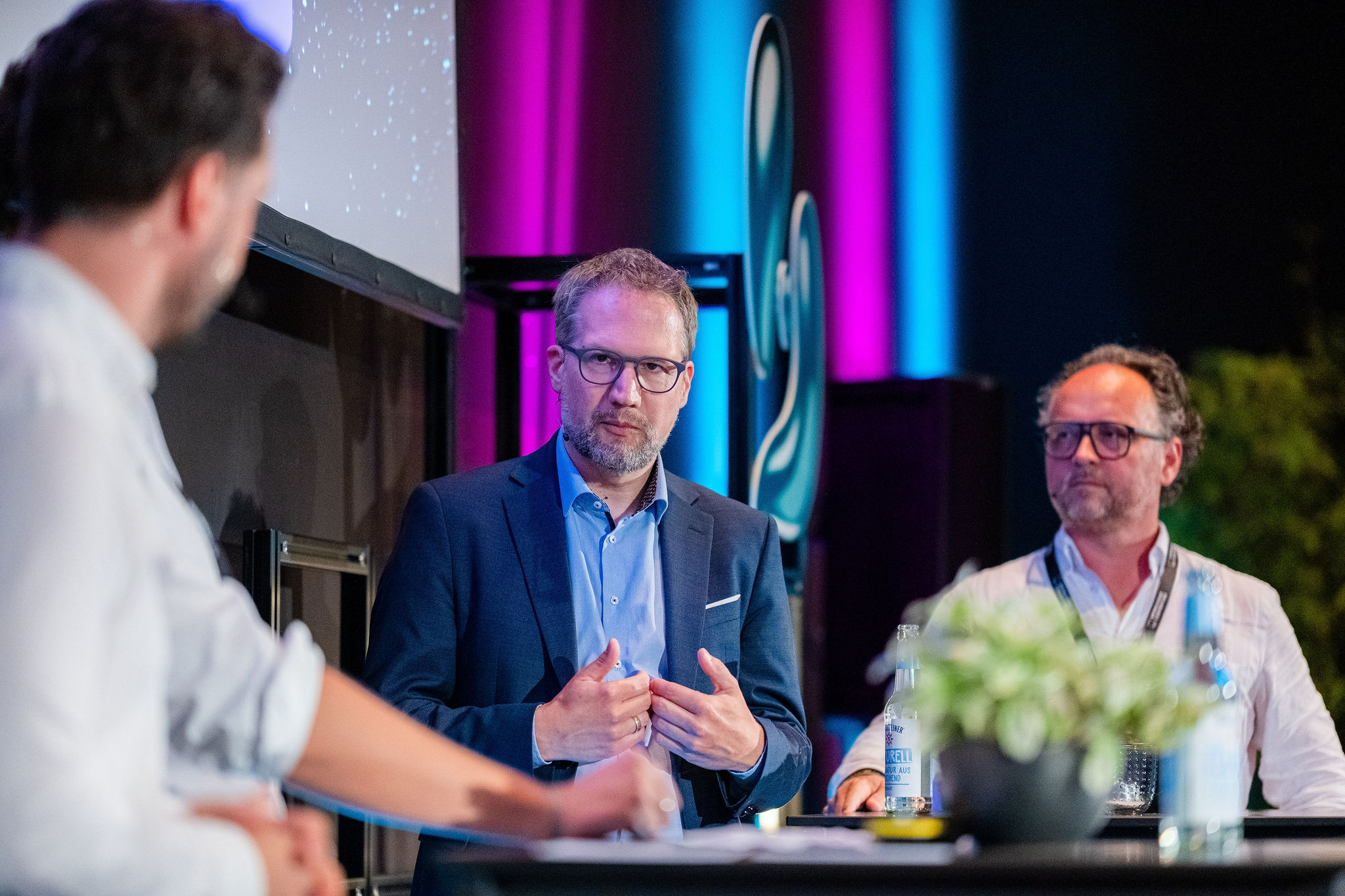
3M has been innovating with hydrogen for years, long before the hype. In this interview, Jens Eichler, Hydrogen Technology & Business Architect, explains how 3M structures innovation and how start-ups and corporations can accelerate real-world implementation together.
Jens, thanks for joining us today. How does 3M structure innovation across businesses and regions?
We organize innovation around 49 company‑owned technology platforms. The corporate labs feed those platforms and the business divisions turn platform technologies into applications, which prevents duplication and preserves scale.
Equally important are our innovation culture and market architecture. Our innovation culture allows 3M employees to allocate up to 15% of their work time for projects and ideas of their own choice. Market architecture means understanding how a market works. In my case, my role translates to mapping out where a market like hydrogen matters, identifying the key challenges, and applying 3M technologies accordingly.
How do these technology platforms for different markets co-exist?
Global inputs shape our innovation. I lead hydrogen efforts in EMEA and run projects split between Europe and the U.S. Some projects solve local challenges, others scale globally. But local solutions often become building blocks for other regions.
Additionally, 3M organizes events where employees from all kinds of divisions come together to exchange their newest technology developments which others can potentially build on.
This organic innovation ecosystem is one of the reasons that RWTH Aachen named us one of five “Best Practice Companies” in technology and innovation management in 2025.
What prompted 3M to establish a dedicated hydrogen program?
I started my current role in 2021, but 3M’s hydrogen story goes back decades. One of our adhesives for liquid hydrogen traces to the 1960s when Apollo rockets first used liquid hydrogen.
However, about four years ago we launched a broader push into climate technologies. Our corporate R&D team, in coordination with our advanced materials and energy vertical teams, identified clean tech and energy as high-growth areas. We began exploring hydrogen while my counterparts did the same with carbon capture and lithium extraction from brines.
Something key to understand about hydrogen is that it’s not only an energy carrier but also a chemical reactant. Because of our company’s history with hydrogen, we can pursue both applications and already have solutions in market. However, we constantly look for gaps and challenges to solve with our technology platforms.
What were the main challenges you faced with this renewed focus on hydrogen?
Hydrogen is still an emerging market. Grey hydrogen is established, but green hydrogen requires building a new ecosystem across production, transport, and end use. As such, there are ups and downs. One week something is considered to have market potential, the next projects considered very important are cancelled.
A concrete challenge we discovered was funding design. Early flagship programs sometimes overlooked suppliers, which left a gap for companies like ours. Conversations with program leaders confirmed this was a blind spot.
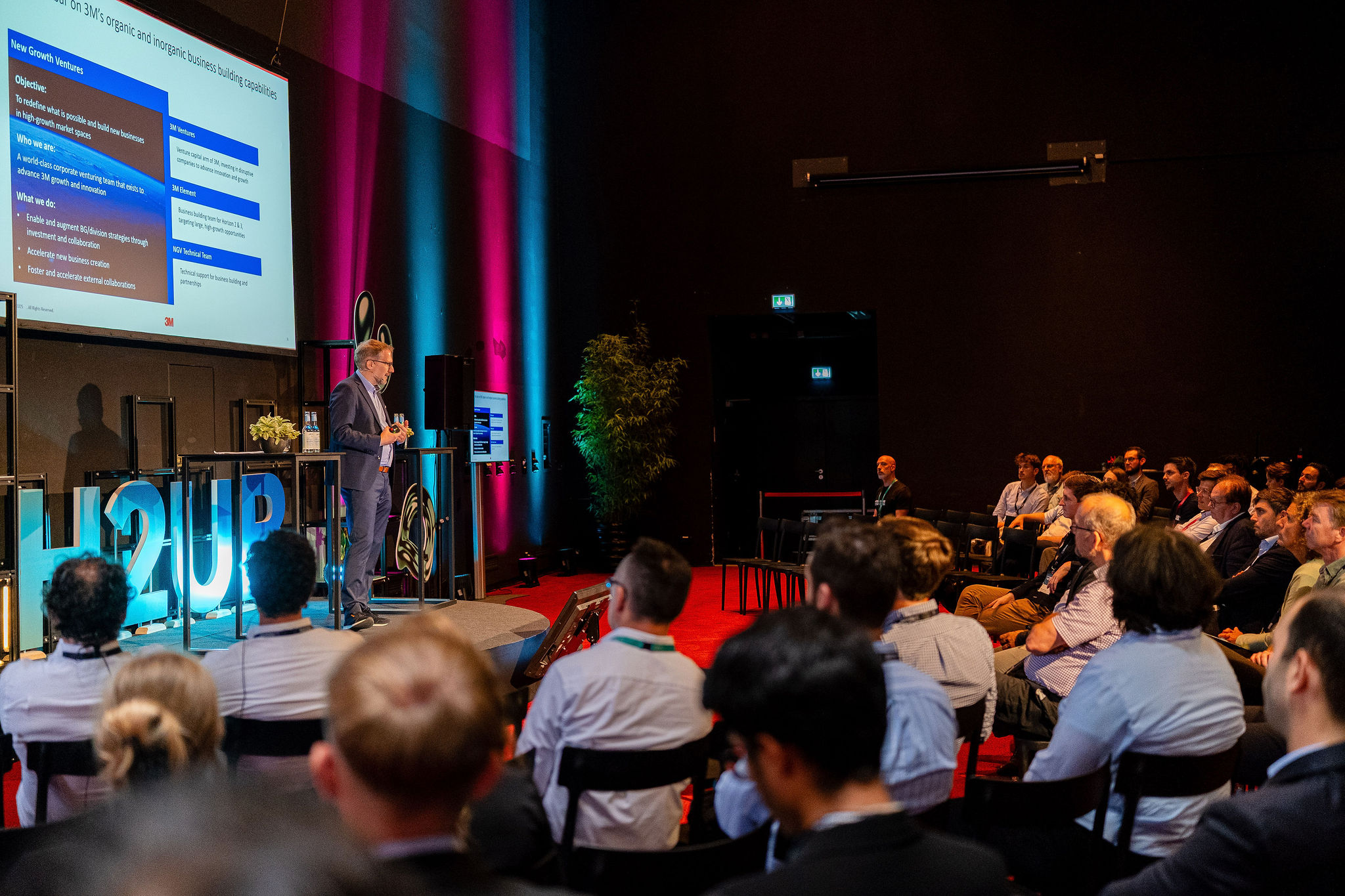
What benefits does having a focused hydrogen program bring compared to embedding it in existing business units?
Hydrogen applications are evolving rapidly, and its new markets demand new metrics, different decision rules, and coordinated effort across technology, process, and design.
Integrating hydrogen into an existing business division in an established market with set metrics may prove unsuccessful. You can’t judge new products in a new market with the metrics of an existing market.
In short, separating units into those looking into new markets and those looking into existing markets makes sense because you need different approaches.
What makes collaboration with H2UB valuable for 3M’s hydrogen ambitions?
Innovation culture has shifted. When I was a PhD student, patenting in materials science was rare and people mostly published papers. Today, universities push technology transfer more actively, often via start-ups, and programs like H2UB help those ventures mature.
Start-ups increasingly become the standard to commercialize research across sectors. They are agile and operate in emerging markets where corporates struggle to engage. Start-ups also reveal market realities, surface technical challenges, and accelerate learning.
Collaborating with H2UB helps us understand technologies and learn about the hydrogen market and its challenges.
In which ways can start-ups contribute to your hydrogen program?
We can supply materials that start-ups use in their products and in return gain real world data and operational experience with our materials. We’ve also invested in two electrolyzer manufacturers through our venture group to learn about market dynamics.
Start-up collaboration is about understanding the market and validating how our products perform in real applications.
What are your key lessons learned from start-up collaboration?
First, start-ups operate under tight time and cash constraints, so corporate partners should set realistic expectations and avoid overpromising interest or outcomes.
Second, manage expectations clearly. Don’t inflate a start-up’s prospects by implying immediate large-scale commitment. That creates false hope and can harm the relationship.
Third, embrace the speed gap. Start-ups often move much faster than corporations; that can be challenging but also valuable. Working with start-ups can bring agility to the corporate side, while corporate partners can offer structure and stability.
Fourth, expect organizational friction. Collaborating with start-ups will test internal processes and require flexibility from both sides.
Fifth, consider market risk for start-ups. In sectors like hydrogen, market timing and scale are uncertain. Start-ups that bet on a single market are more vulnerable; corporates usually have diversified portfolios and can make riskier decisions.
Finally, stay optimistic but realistic. I still believe in hydrogen and see signs we’re moving past the disillusionment toward real implementation which is good news for both start-up and corporate partnerships.
Thank you for your insights, Jens!
About 3M
3M was founded in 1902 in Minnesota, USA, and is currently recognized as one of the most innovative companies in the world. The material science and manufacturing company has a global presence, with operations in 50 countries and 40 research labs worldwide.
3M’s 49 proprietary technology platforms are the backbone of its innovative power and their portfolio encompasses a broad array of products for nearly every area of life. 3M has obtained more than 135,000 patents over its history, a testament to its commitment to innovation.